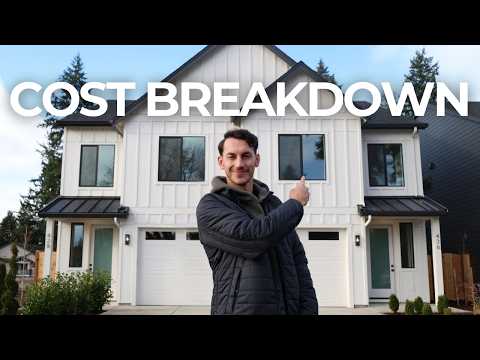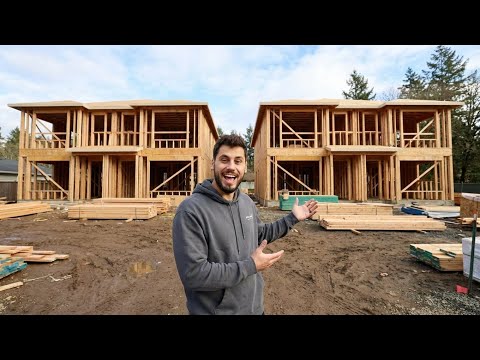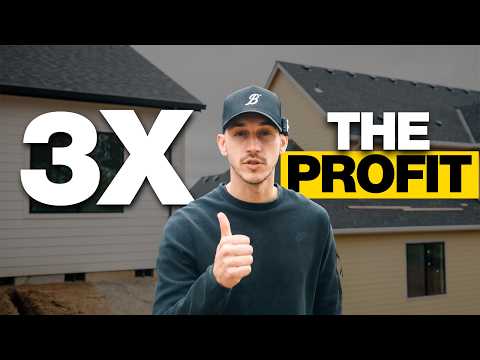
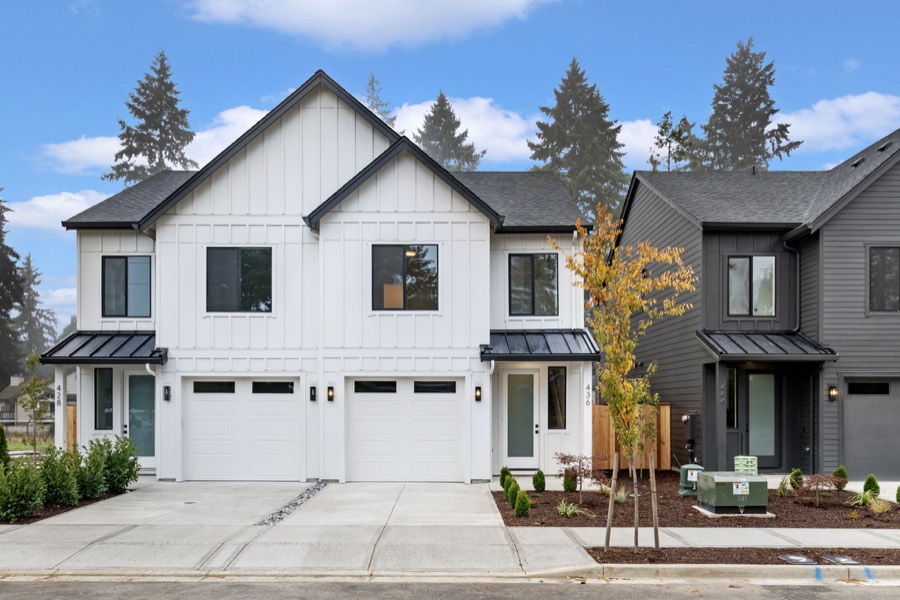
Arthur · 114 units
Location: Vancouver, WA
Farragut, Kenton, Ashley, Fircrest, Livingstone
Watch this project’s journey:
InstagramSee more on this project:
View the projectNumbers & Deals · Arthur the Developer
The five budgeting and comping mistakes we see kill margin on new construction deals, and the checks we run instead.
Full guide: Numbers & Deals →Construction can always be fixed. You do not like the tile backsplash, you change it, and it costs a little. What cannot be fixed is your land price, your financing, and your comparables, because those lock in the day you buy. That is why two developers can build the identical product and one makes double the profit. Here are the five mistakes that quietly cost $50,000 to $100,000 a deal.
On a 3,450 square foot build, the house next door is 6 years old, 2,700 square feet, and sold around $1.2 million. Down the street, the same bedroom, bathroom, and square footage with lesser finishes sold at $1.335 million and went pending in three days. The highest comp in the neighborhood is $1.6 million, but that house is bigger, older, and on more land.
Arthur underwrote at $1.335 million, apples to apples, and paid $312,000 for land against a $400,000 ask. Underwrite it at $1.5 million instead and suddenly $450,000 for the land looks justified. That is how a margin disappears before the first shovel. List high if you want. Underwrite at the comp you know you will hit.
A number from a past build is a fine opening estimate, and $150 per square foot was the opening estimate here. Then feasibility starts and the lot turns out to be sloped with retaining walls. Three line items change on a slope: excavation, foundation, and lumber, because post and beam framing to level a floor is additional material.
So the excavator, the foundation contractor, and the lumber supplier each priced the real conditions on site. The budget came back at $170 per square foot. That $20 difference is $60,000 on this build. Catching it before closing on land is the difference between a 28% margin and a 10% one.
Hard costs are anything on site. Soft costs are permits, plans, engineering. On a sloped lot the scope quietly grows: rock retaining walls need permits, engineering, material, and labor. Geotech testing determines soil type, which determines how deep you dig and what storm facility you need. Sidewalks may or may not be required.
A builder understands all of it but will not necessarily volunteer it, so you have to ask. Miss $25,000 of scope on a deal you thought carried $100,000 of profit and you are at $75,000. Add the slope costs of $30,000 to $40,000 and your $100,000 is closer to $30,000.
People budget six months for the build and forget permitting, the punch list, and the time it takes to sell. All that blue tape on the walls at the end is real calendar. The rule: whatever your project timeline is, add 50%. A 12 month project takes an 18 month loan.
A longer term up front costs maybe a quarter to half a point, so $2,000 to $4,000. Hit the 12 month wall instead and the lender offers an extension at two points. That is roughly four times the cost of just buying the time at the start. We learned this on loans in the $3 to $5 million range, and the checks were large.
The budget on this project came in at $167 per square foot. Arthur went to the bank at $175, adding about 5%. What consumed it was not disaster, it was choice: removing a wall, adding an arch, a drywall hood, and a stone fireplace in the living room. The contingency absorbed all of it and the margin held.
Carry 5% to 10% depending on the project type, and confirm you still clear a 20% to 25% return with the contingency spent, not before.
Ready to stop watching and start building?
Join the BuildUp Challenge and book a call with our team.
Join the BuildUp ChallengeWatch more on Arthur's channel.
Not construction. Construction can be adjusted. Your land price, your financing structure, and your comparables lock in the day you buy, which is why two developers can build the identical product and one makes double the profit.
Apples to apples, and conservatively. On a 3,450 square foot build, Arthur underwrote at the $1.335 million comp with matching bed, bath, and square footage that went pending in three days, not the $1.6 million neighborhood record on a bigger, older house with more land. That difference is what let him pay $312,000 for land instead of talking himself into $450,000.
Only as an opening estimate. On a sloped lot, three line items change: excavation, foundation, and lumber, because post and beam framing to level a floor is extra material. On one project that took the budget from $150 to $170 per square foot, a $60,000 swing found during feasibility.
Take your projected timeline and add 50%. A 12 month project needs an 18 month loan. Buying the extra term up front costs a quarter to half a point, roughly $2,000 to $4,000. Asking for an extension after the loan expires typically costs two points, about four times as much.
5% to 10% depending on project type. On one build, the budget was $167 per square foot and Arthur went to the bank at $175. The contingency got spent on choices rather than disasters, removing a wall, adding an arch, a drywall hood, and a stone fireplace, and the margin still held.
Nationwide
65+ active member builds, 300+ units in progress, across 20+ states. Click a market to see who is building there.
346
Units developing live
49
Markets
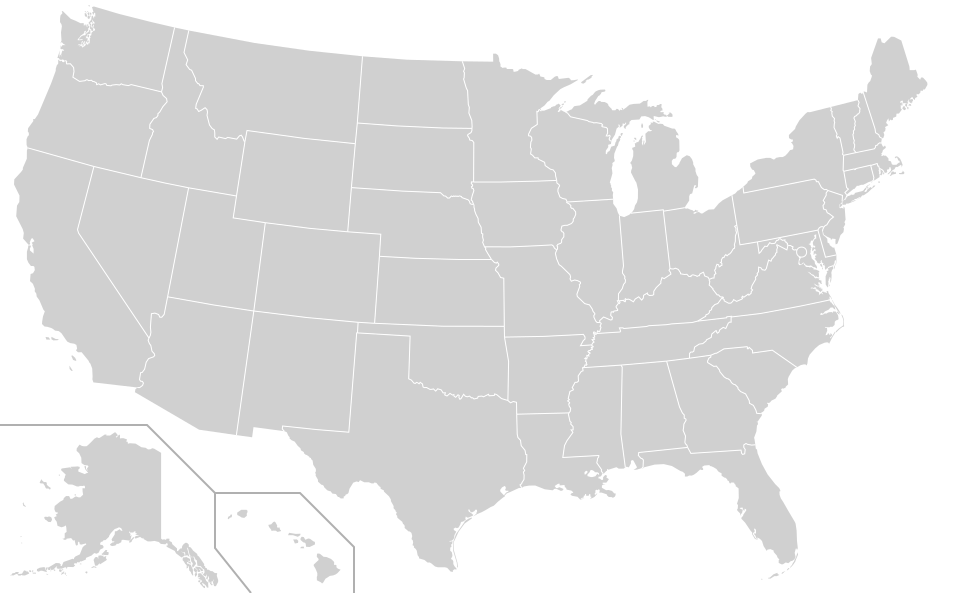
Location: Vancouver, WA
Farragut, Kenton, Ashley, Fircrest, Livingstone
Watch this project’s journey:
InstagramSee more on this project:
View the projectClick this market again for the next build here.
Your next step
New to development
A step-by-step challenge to line up your first deal, with our team beside you.
Join the ChallengeLive every week
Arthur and Ruben break down real deals and answer your questions in a live Q&A.
Join the live masterclassReady to build
Development consulting for people ready to put a real deal together now.
Explore consultingFree Resources
The templates, guides, and live sessions we hand every new member.
Real 2026 build costs for 43 US markets, from Arthur's own price map, with a live profit calculator.
Explore →Free PDFThe complete roadmap from land to sale, free.
Get it →Free AccessFree resources and every member story in one place.
Get it →Live WeeklyLive masterclass, weekly on Tuesdays. How to become a developer even with zero construction experience.
Get it →Free TemplateThe letter we use to reach lot owners directly, plus the training to use it.
Get it →Starter KitEverything you need to get moving on your first development, in one place.
Get it →Free CourseOur full 2.5-hour course on becoming a developer, land to exit, free on YouTube.
Get it →