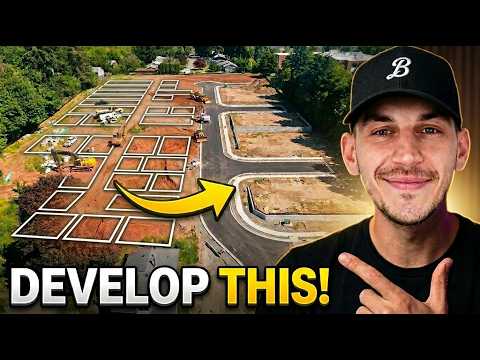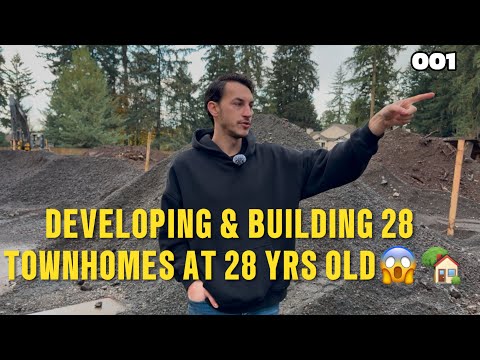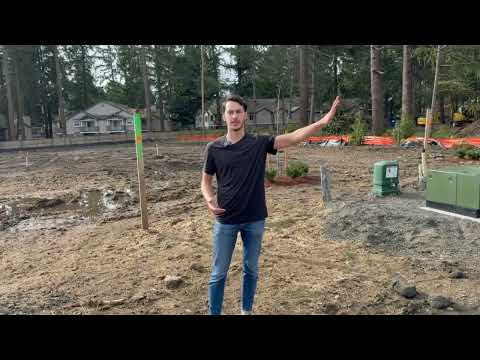
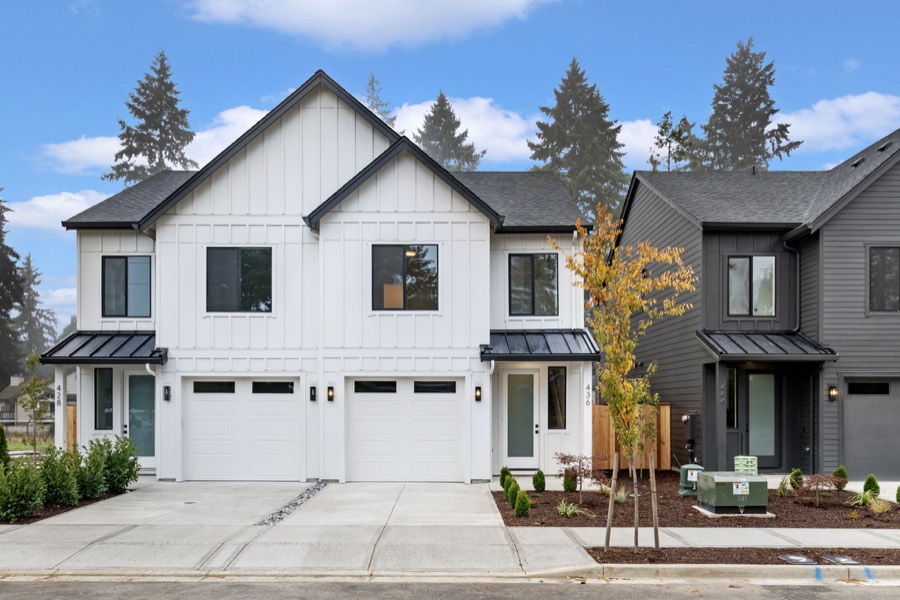
Arthur · 114 units
Location: Vancouver, WA
Farragut, Kenton, Ashley, Fircrest, Livingstone
Watch this project’s journey:
InstagramSee more on this project:
View the projectLarger Projects · Arthur the Developer
How we took a single family house and turned the parcel into a 6-plex, using infill development on an existing lot.
Full guide: Larger Projects →Infill development is building inside an already established neighborhood, where the roads, sewer, and water are already in. This is the full story of the Farragut project in Portland: a run-down 110-year-old house bought for $275,000, torn down, and replaced with a 5,500 sq ft 6-plex worth $1.8 to $1.95 million.
Look around homes from the 1950s or older in any major city. You are hunting for one of two setups: a house so far gone that a flipper will not touch it, or a house sitting at the edge of its lot with excess land where one or two more units fit. This deal was the first kind.
We build for about $150 a square foot; infill runs $165, because you bring in the three utilities. Every lateral costs $3K to $8K, so sewer plus water is $6K to $16K, and power is another $2K to $4K. Price that in before you offer.
Every project has two halves: planning and permitting, then vertical and sale. In a big city, plan about 2 months for design and engineering and 6 months for permits, then roughly 8 months to build and 2 to sell. Know the 18 months going in.
A bridge loan runs 25-30% down. Seller finance might be $50K down with the seller carrying the rest at a negotiated rate. The third option, which Arthur has used more than 30 times, is a long-term contract: an 8-month closing with $10K to $30K of released earnest money, protected by a memorandum of contract recorded on title. That option costs $0 in interest.
A property like this would sell for $400K; it closed at $275K. Add $5K of closing costs and $50K of demolition. Fifty grand sounds insane, but in Portland any house 100 years or older must be deconstructed by hand, and this one had asbestos to abate. Demo belongs in the land basis, so the land is $330K.
5,500 sq ft at $165 a foot is about $900K, plus a builder fee locked as a $90K flat fee so the budget cannot inflate, $990K total. Six units averaging $300K to $325K each puts the exit at $1.8M to $1.95M against roughly $1.42M all in with finance fees. After 5% selling costs that is $290K to $420K of profit, a 22-32% margin.
Ready to stop watching and start building?
Join the BuildUp Challenge and book a call with our team.
Join the BuildUp ChallengeWatch more on Arthur's channel.
Infill development is building new housing inside an already established neighborhood, usually around homes from the 1950s or older, in cities like Portland, Seattle, or Chicago. The roads and utilities are already in place. You typically replace a house too run down to flip or build on excess land beside an existing home.
Arthur builds for $150 a square foot normally and $165 for infill, because he has to connect sewer, water, and power. Builder grade construction averages about $140 a square foot nationwide. Anything over $200 for builder grade means the builder is baking in extra profit.
Plan on about 18 months total. Roughly 2 months for design and engineering, 6 months for permits in a big city, 8 months to build, and 2 months to sell.
Three main options: a bridge loan at 25 to 30% down, seller financing at a negotiated rate, or a long term contract with an extended closing and released earnest money protected by a recorded memorandum of contract. The long term contract route can cost $0 in interest.
A minimum 20 to 25% ROI after agent fees or the deal is a pass. Arthur's Portland 6-plex projects 22 to 32%. The cushion matters because if the market corrects, you can refinance or rent the property instead of losing it.
Nationwide
65+ active member builds, 300+ units in progress, across 20+ states. Click a market to see who is building there.
346
Units developing live
49
Markets
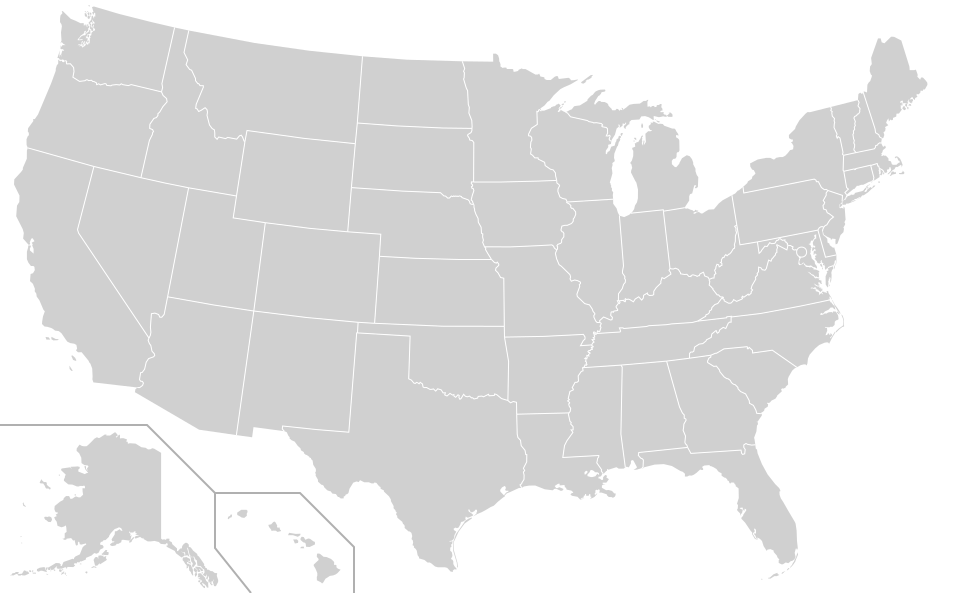
Location: Vancouver, WA
Farragut, Kenton, Ashley, Fircrest, Livingstone
Watch this project’s journey:
InstagramSee more on this project:
View the projectClick this market again for the next build here.
Your next step
New to development
A step-by-step challenge to line up your first deal, with our team beside you.
Join the ChallengeLive every week
Arthur and Ruben break down real deals and answer your questions in a live Q&A.
Join the live masterclassReady to build
Development consulting for people ready to put a real deal together now.
Explore consultingFree Resources
The templates, guides, and live sessions we hand every new member.
Real 2026 build costs for 43 US markets, from Arthur's own price map, with a live profit calculator.
Explore →Free PDFThe complete roadmap from land to sale, free.
Get it →Free AccessFree resources and every member story in one place.
Get it →Live WeeklyLive masterclass, weekly on Tuesdays. How to become a developer even with zero construction experience.
Get it →Free TemplateThe letter we use to reach lot owners directly, plus the training to use it.
Get it →Starter KitEverything you need to get moving on your first development, in one place.
Get it →Free CourseOur full 2.5-hour course on becoming a developer, land to exit, free on YouTube.
Get it →