Arthur · 114 units
Location: Vancouver, WA
Farragut, Kenton, Ashley, Fircrest, Livingstone
Watch this project’s journey:
InstagramSee more on this project:
View the projectLarger Projects · Arthur the Developer
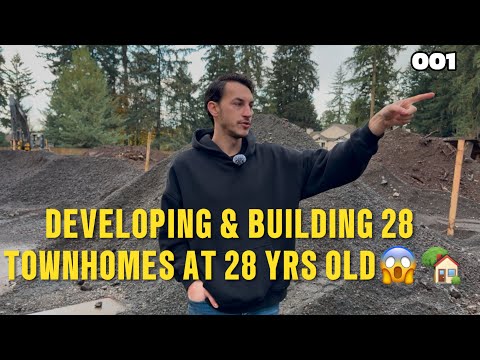
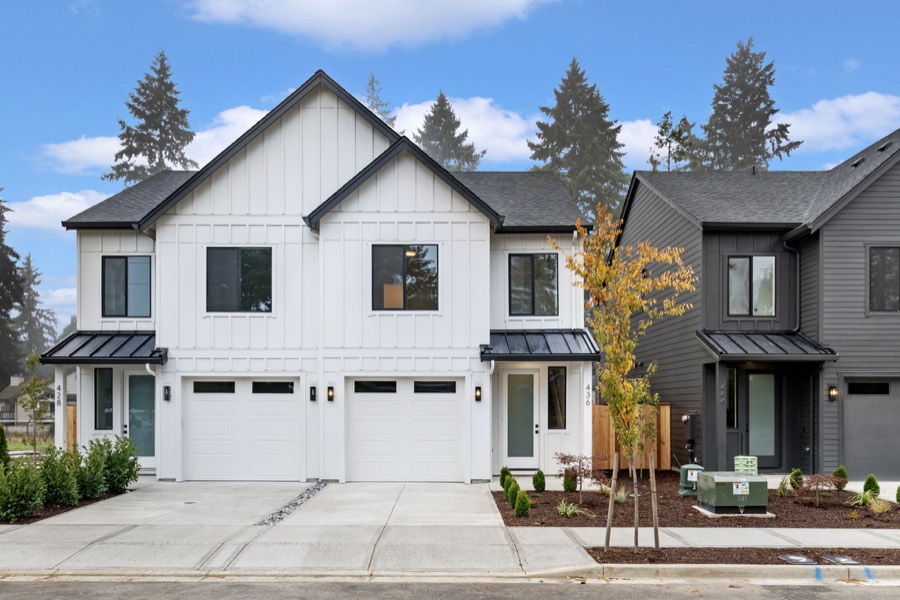
An onsite breakdown of a 28 townhome development: how a project this size is structured from land to exit.
Full guide: Larger Projects →Fircrest site development is finished. Utilities are in, roads are paved, curbs and sidewalks are poured, and the public landscaping is installed. This is the handoff moment: the developer’s job is done and the builder’s job starts.
There was already an existing sewer main, so the work was connecting laterals rather than extending a system. The roads are paved, and the green marks on the fresh asphalt are the locate crew marking the sewer lines, with water lines running to each meter box. Power was trenched earlier and the equipment is now installed: a transformer, a pedestal, and a junction box, all placed by the power company.
Even after passing inspection, the utilities get located again so the city inspector can physically see them in the ground during his walkthrough. Every lateral is stubbed out and staked with a spray painted 2x4, plus sewer cleanouts for required access.
As part of the approval to create the lots, the public sidewalk and the landscaping in the right of way have to be installed at the developer’s cost, and then they are no longer his. Everything from the property line back stays private and will belong to the eventual unit owners. That public improvement work is a real line item that people forget when they price a subdivision.
One item still outstanding: the cluster box unit for mail. It gets installed near the end of vertical construction, because the city does not need it now.
With the site work done, the surveyor comes back and maps everything: every sewer line, every water line, the curbs, the sidewalk, the asphalt, and the heights of all of it. That becomes the as-built plan set, meaning as actually built. It goes to the city, which compares it against the approved civil plans and signs off.
While the plat works its way through recording, the vertical side is already moving. Construction plans are drawn, structurally engineered, and in city review. First round comments came back and the resubmittal goes in this week, with approval expected in two to three weeks.
Both tracks have to finish before building starts, so running them at the same time rather than in sequence is what removes months from the schedule. The plat has to be recorded and the building permits have to be approved. Waiting for one before starting the other is a self-inflicted delay.
Ready to stop watching and start building?
Join the BuildUp Challenge and book a call with our team.
Join the BuildUp ChallengeWatch more on Arthur's channel.
Sewer laterals connected to the existing main, water lines run to each meter box, roads paved, curbs and sidewalks poured, power equipment set by the utility (transformer, pedestal, junction box), right of way landscaping installed, and every lateral stubbed and staked with a spray painted 2x4 for the vertical crews.
After site work, the surveyor maps everything actually built, every sewer and water line, the curbs, sidewalk, asphalt, and all the heights, into an as-built plan set. The city compares it against the approved civil plans and signs off. You cannot record the final plat until as-builts clear.
The plat is what legally creates the individual lots. Without recorded lots, one big parcel stays one big parcel, and you cannot sell units separately no matter how finished the site looks.
Yes, and you do not get to keep them. As part of the approval to create the lots, the developer installs the public sidewalk and the landscaping in the right of way at his own cost, and it becomes public. Everything from the property line back stays private. Budget it as a real line item.
Yes, and you should. Both tracks have to finish before construction starts, so run them in parallel. On this project the vertical plans were drawn, engineered, in city review, and coming back from first round comments while the plat was still working its way through recording.
Nationwide
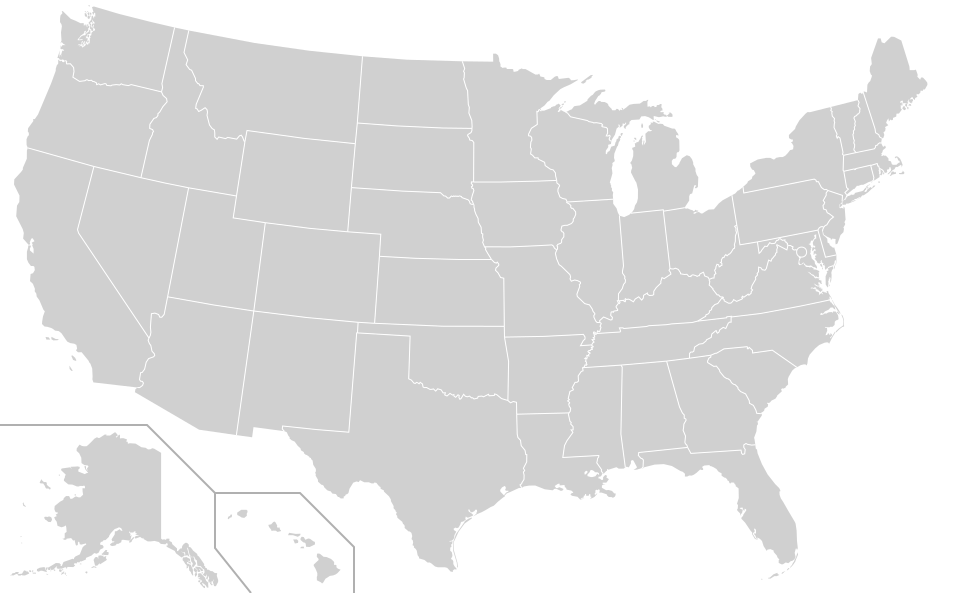
65+ active member builds, 300+ units in progress, across 20+ states. Click a market to see who is building there.
346
Units developing live
49
Markets
Location: Vancouver, WA
Farragut, Kenton, Ashley, Fircrest, Livingstone
Watch this project’s journey:
InstagramSee more on this project:
View the projectClick this market again for the next build here.
Your next step
New to development
A step-by-step challenge to line up your first deal, with our team beside you.
Join the ChallengeLive every week
Arthur and Ruben break down real deals and answer your questions in a live Q&A.
Join the live masterclassReady to build
Development consulting for people ready to put a real deal together now.
Explore consultingFree Resources
The templates, guides, and live sessions we hand every new member.
Real 2026 build costs for 43 US markets, from Arthur's own price map, with a live profit calculator.
Explore →Free PDFThe complete roadmap from land to sale, free.
Get it →Free AccessFree resources and every member story in one place.
Get it →Live WeeklyLive masterclass, weekly on Tuesdays. How to become a developer even with zero construction experience.
Get it →Free TemplateThe letter we use to reach lot owners directly, plus the training to use it.
Get it →Starter KitEverything you need to get moving on your first development, in one place.
Get it →Free CourseOur full 2.5-hour course on becoming a developer, land to exit, free on YouTube.
Get it →