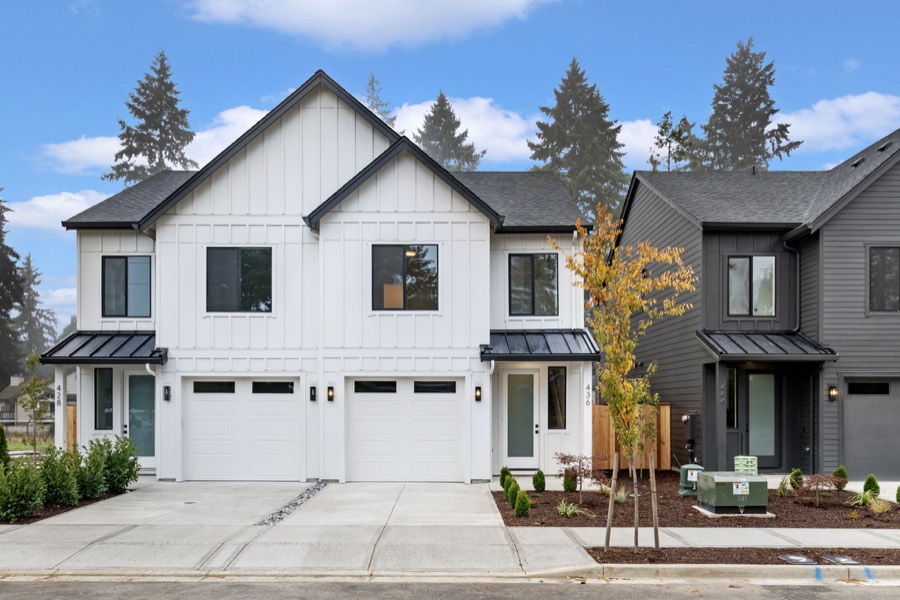
Arthur · 114 units
Location: Vancouver, WA
Farragut, Kenton, Ashley, Fircrest, Livingstone
Watch this project’s journey:
InstagramSee more on this project:
View the projectGetting Started · Arthur the Developer
Why agents, wholesalers, and flippers keep doing the work while developers capture the biggest check, and the 7-step process for making the jump.
Full guide: Getting Started →If you have been in real estate a while, there is a moment where something shifts. You found the deal, listed it, or flipped it, then watched the developer come in, build the project, and take the biggest check. You already understand deals, buyers, and value. Development is not a separate world, it is the next level of control.
Agents chase the next listing. Wholesalers chase the next contract. Flippers manage timelines, risk, and surprise issues. Even when you are successful, the clock resets every single month. This industry rewards ownership of the project, not participation in it.
You do not swing a hammer and you do not become the contractor. Development is coordination: understanding the numbers, structuring the financing, building the right team, and managing the process strategically. If you already understand real estate, you are much closer than you think.
The money is made in the buy. 75-90% of high-profit deals are found off-market, direct to seller. Expect to evaluate 20 to 50 lots to find 1 viable deal.
Reverse-engineer from the final sale price. Land should cost 20-25% of the finished value or less, and the deal needs a minimum 20% ROI before you move.
Don't reinvent the wheel. Replicate what's already selling in your market. A drafter runs about $1/sqft versus $2-3 for an architect on residential.
This is accountability work: push the city and your drafter to meet deadlines, set reminders, follow up. Trust but verify.
Your lender is a silent partner providing 80-90% of the capital, and on-draw interest means you only pay on money actually deployed.
The builder manages the subs. You approve finishes, monitor the budget, and pay only when milestones are met. Never pay ahead.
Sell for profit, hold and rent, or live in it. Having plans B and C built in is your risk mitigation.
Arthur has assigned over $1.5 million in wholesale deals and developed far more. Wholesale is distressed and difficult, and about half the time the transaction never closes. A typical assignment pays $10,000 to $15,000. A development deal pays $150K to $400K depending on units, and a fourplex takes the same time and energy as a single house with four times the profit.
Avery was flipping houses in Florida at $30K to $50K per deal. He is now doing a duplex near one of his rentals, teardown to build-out, at around $250,000 in projected profit on a project that takes about a year. Kadoh was an agent focused on listings. She raised outside capital, found an off market deal, and planned four cottages projected at over half a million dollars of profit. At $10,000 a commission that is 50 listings of income for roughly the effort of 5 to 10.
Ready to stop watching and start building?
Join the BuildUp Challenge and book a call with our team.
Join the BuildUp ChallengeWatch more on Arthur's channel.
No. Development is not construction, it is coordination: understanding the numbers, structuring financing, building the right team, and managing the process strategically. Most people who make the jump are agents, wholesalers, and investors, not construction experts.
A typical wholesale deal pays $10,000 to $15,000, while a development deal pays $150K to $400K depending on how many units you build. About 50% of wholesale transactions also fall through before closing.
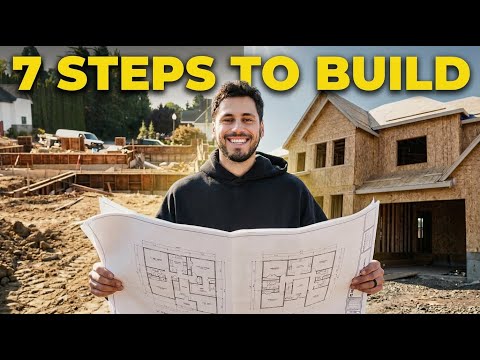
A 7-step system: identify land that pencils, underwrite the margins, design the right project for the market, navigate permits, structure the financing, manage construction as a developer, and exit strategically. Seen as a framework, development becomes a repeatable system instead of a leap into the unknown.
Yes. One client, an agent, raised outside capital, found an off market deal, and planned four cottages projected at over $500,000 in profit. At $10,000 per commission that equals 50 listings, for the effort of roughly 5 to 10 listings.
Nationwide
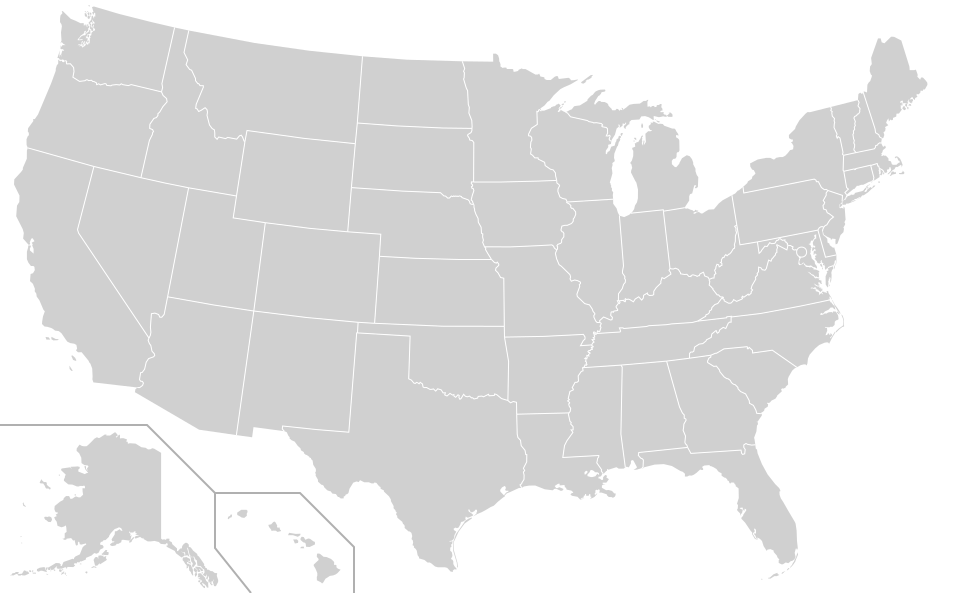
65+ active member builds, 300+ units in progress, across 20+ states. Click a market to see who is building there.
346
Units developing live
49
Markets
Location: Vancouver, WA
Farragut, Kenton, Ashley, Fircrest, Livingstone
Watch this project’s journey:
InstagramSee more on this project:
View the projectClick this market again for the next build here.
Your next step
New to development
A step-by-step challenge to line up your first deal, with our team beside you.
Join the ChallengeLive every week
Arthur and Ruben break down real deals and answer your questions in a live Q&A.
Join the live masterclassReady to build
Development consulting for people ready to put a real deal together now.
Explore consultingFree Resources
The templates, guides, and live sessions we hand every new member.
Real 2026 build costs for 43 US markets, from Arthur's own price map, with a live profit calculator.
Explore →Free PDFThe complete roadmap from land to sale, free.
Get it →Free AccessFree resources and every member story in one place.
Get it →Live WeeklyLive masterclass, weekly on Tuesdays. How to become a developer even with zero construction experience.
Get it →Free TemplateThe letter we use to reach lot owners directly, plus the training to use it.
Get it →Starter KitEverything you need to get moving on your first development, in one place.
Get it →Free CourseOur full 2.5-hour course on becoming a developer, land to exit, free on YouTube.
Get it →