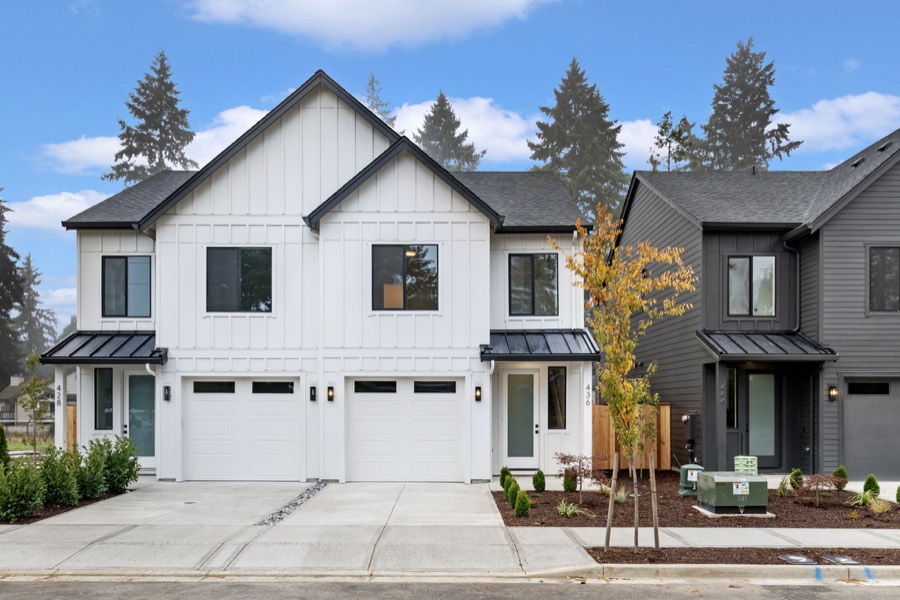
Arthur · 114 units
Location: Vancouver, WA
Farragut, Kenton, Ashley, Fircrest, Livingstone
Watch this project’s journey:
InstagramSee more on this project:
View the projectHow we would start today if we had zero deals: the three tiers of projects we would climb through, from finished lots up to subdivisions.
Full guide: Getting Started →If Arthur were starting residential development from zero today, with no portfolio and no track record, there are three ways in: finished lots, infill development, and subdivisions. Each has a different capital stack, a different timeline, and a different ceiling. Most beginners pick the wrong one, or never see the whole board.
A developer takes acreage, puts in roads, sewer, water, and sidewalks, and creates lots. When they sell off most of the homes and move on to their next project, the last five or ten vacant lots get sold to small builders and to people building a personal house. Everything hard is already done: you pull permits and build.
Capital in is roughly $40,000 to $100,000 at 10% to 15% down. Timeline is 8 to 12 months. Skill level is 1 out of 3. Profit runs $50,000 to $200,000 at a 20% to 25% ROI, because the original developer’s margin is already baked into the lot price.
Infill means building inside an established neighborhood. Old houses sit at the edge of their lots with extra land beside them, and cities want that land used for housing. So you split off the excess and put up a duplex, or tear down a house too far gone to remodel and build six units. Anyone who has driven through Seattle, Nashville, or Portland and seen a brand new building tucked behind a 100 year old house has seen infill.
Capital in is about $75,000 to $300,000. Timeline is 12 to 24 months, of which 9 to 12 is soft cost: roughly 3 months of plans and design, 6 months of permits, and 3 months of delays, funded with a bridge loan. Then 6 months to build and 3 to 6 to sell. Skill level is 2 out of 3, mostly because of permitting. Profit is $100,000 to $600,000 at a 25% to 40% ROI.
Here you become the developer who created those finished lots. You take raw farmland, add a road and a cul-de-sac, and turn it into lots. Capital runs from about $250,000 for entitlement alone up to seven figures if you build it out. Timeline is 12 to 36 months. Skill level is 3 out of 3. ROI runs 30% to 50%.
The exits are what make it interesting. Put land under a 12 month contract at a $1 million price without buying it, spend $250,000 getting entitlements approved, and sell the approved project to a national homebuilder for $1.6 million. That is $450,000 of profit on $250,000, in a year, without ever owning the land or building a house. Or develop it yourself and clear closer to $2 million. Or develop it and build the homes, adding roughly $40,000 per house on top.
Arthur keeps three to five projects live at every level simultaneously, and the reason is cash flow, not ego. Finished lots pay in about 12 months, infill pays in about 18, and subdivisions pay in two to three years. Stacked together, checks arrive continuously instead of all at once at the end of a three year cycle.
This is the strategy that makes infill worth learning. Find an off market house on two legal lots where the legal description already reads lot 9 and lot 10. The house is worth $300,000 as is. After 5% agent fees a seller nets $275,000, and most investors would offer $230,000 to $250,000. So offer the full $275,000 and ask for a 90 day close.
The seller gets more than a listed sale would net them, and you get the time you need.
A lot confirmation or lot split takes roughly 60 days, and you run it while under contract.
That is $27,000 down plus the $5,000 split, so about $32,000 into the deal.
You net $275,000, the same number you promised the seller. The house effectively cost you nothing.
Lot 9 and lot 10, each worth around $100,000, with a land basis of zero.
List one at $100,000. In 90 to 120 days you have roughly $95,000 in hand, zero dollars left in the deal, and a down payment to build on the lot you kept.
Ready to stop watching and start building?
Join the BuildUp Challenge and book a call with our team.
Join the BuildUp ChallengeWatch more on Arthur's channel.
Finished lots, infill development, and subdivisions. Finished lots need $40K to $100K and 8 to 12 months at a 20% to 25% ROI. Infill needs $75K to $300K and 12 to 24 months at 25% to 40%. Subdivisions start around $250K for entitlement and run 12 to 36 months at 30% to 50%.
A lot inside a subdivision a developer already built out, with roads, sidewalks, sewer, and water in place. When the developer moves on to their next project, the last five or ten vacant lots often get sold to small builders and to people building a personal house. All that is left is permits and construction.
Entitlement. Put land under a 12 month contract at $1 million without buying it, spend about $250,000 getting the project approved, then sell the approved project to a national homebuilder for $1.6 million. That is $450,000 of profit on $250,000, in a year, without ever owning the land.
Find an off market house sitting on two legal lots. Offer the seller their full net-of-fees number, roughly $275,000 on a $300,000 house, in exchange for a 90 day close. Split the lots for about $5,000 during the contract, close at 10% down, then sell the house for what you paid. You keep two lots with a land basis of zero.
Run all three levels at once, three to five projects each. Finished lots pay in about 12 months, infill in about 18, and subdivisions in two to three years. Stacked together, checks arrive continuously instead of all at the end of a long cycle.
Nationwide
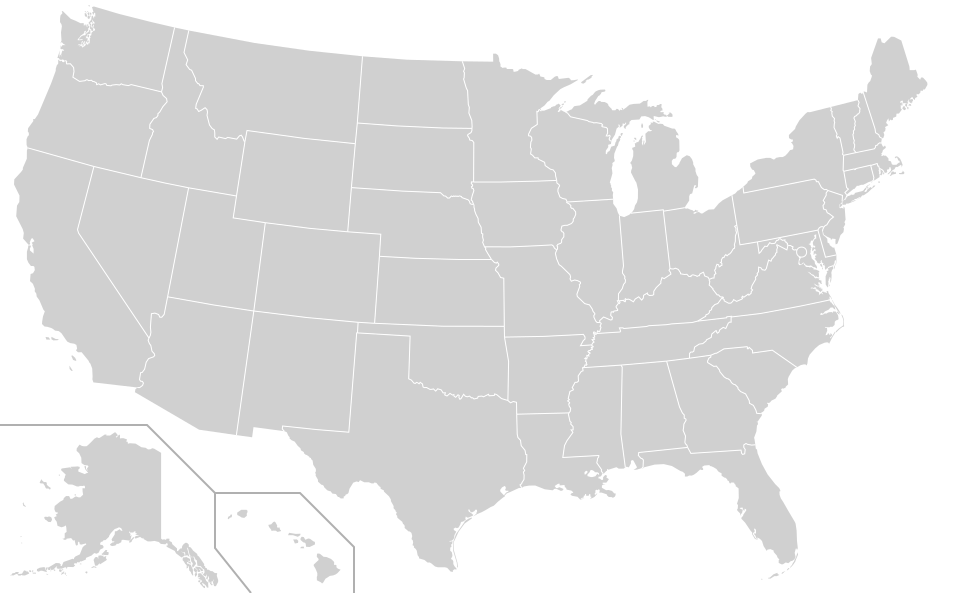
65+ active member builds, 300+ units in progress, across 20+ states. Click a market to see who is building there.
346
Units developing live
49
Markets
Location: Vancouver, WA
Farragut, Kenton, Ashley, Fircrest, Livingstone
Watch this project’s journey:
InstagramSee more on this project:
View the projectClick this market again for the next build here.
Your next step
New to development
A step-by-step challenge to line up your first deal, with our team beside you.
Join the ChallengeLive every week
Arthur and Ruben break down real deals and answer your questions in a live Q&A.
Join the live masterclassReady to build
Development consulting for people ready to put a real deal together now.
Explore consultingFree Resources
The templates, guides, and live sessions we hand every new member.
Real 2026 build costs for 43 US markets, from Arthur's own price map, with a live profit calculator.
Explore →Free PDFThe complete roadmap from land to sale, free.
Get it →Free AccessFree resources and every member story in one place.
Get it →Live WeeklyLive masterclass, weekly on Tuesdays. How to become a developer even with zero construction experience.
Get it →Free TemplateThe letter we use to reach lot owners directly, plus the training to use it.
Get it →Starter KitEverything you need to get moving on your first development, in one place.
Get it →Free CourseOur full 2.5-hour course on becoming a developer, land to exit, free on YouTube.
Get it →